

What I Did in '08: How to Run a Business When the Market Breaks
Every cycle feels like the end of the world while you're in it. Here's the playbook I ran when the market broke, and the one I'd run again tomorrow.
Craig Cecilio · The Relentless Builder
September 2008.
Lehman Brothers is gone. The phones are quiet. Every owner I know is staring at the same number: how many months of cash do I have left?
I've built through every cycle since the '90s. '08 was the one that taught me the most.
Not because it was the worst. Because it showed me who was actually running their company, and who was just riding the market.
When the money stopped
Here's what people forget about 2008. It wasn't just Wall Street.
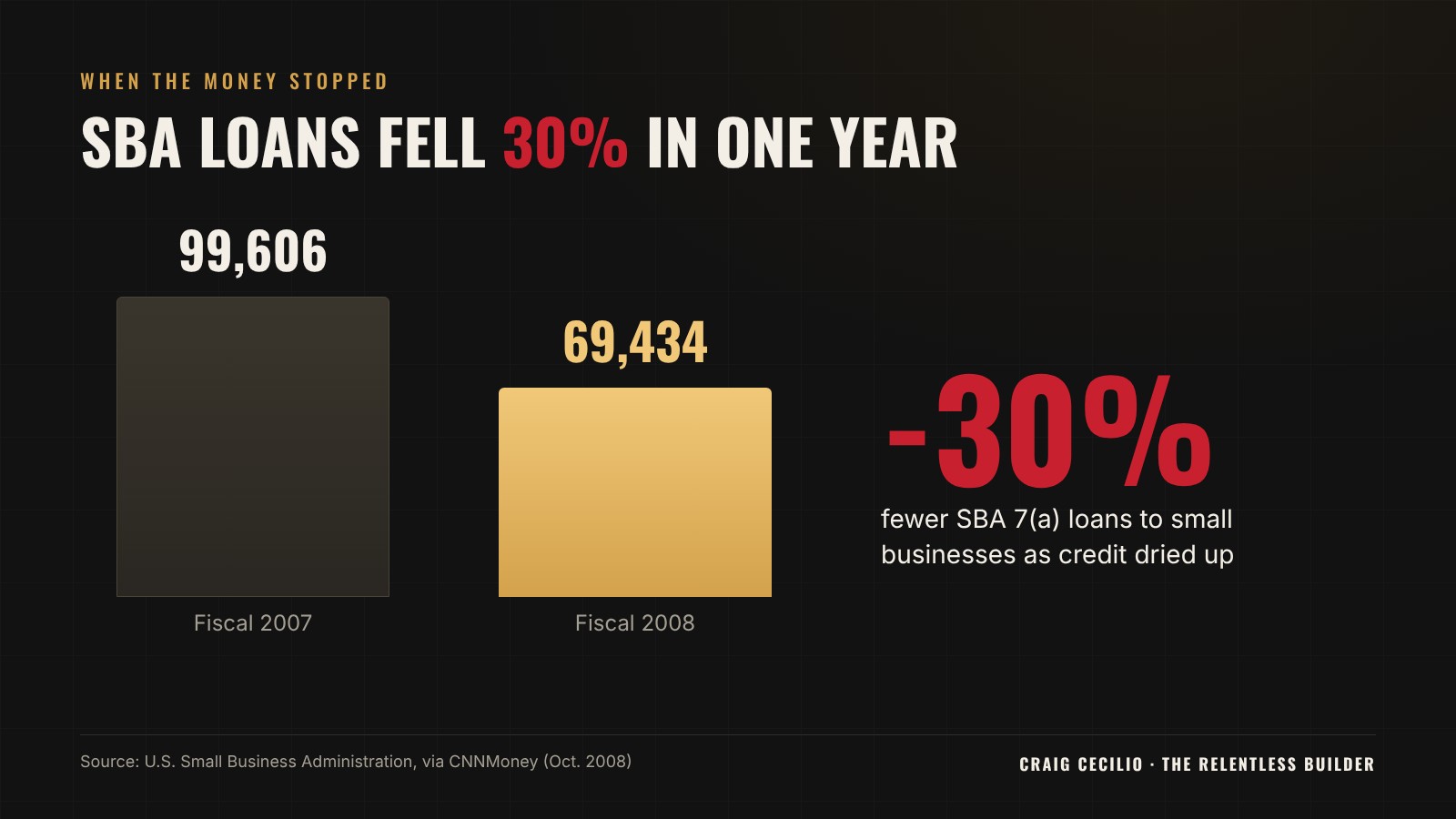
Small business credit dried up almost overnight. The SBA's main loan program made 30% fewer loans in fiscal 2008 than the year before. Banks that had been calling you for years stopped picking up.
If your plan depended on someone else's money showing up on time, you didn't have a plan.
You had a hope.
The four moves I made
I didn't have a secret. I had a standard, and I ran it every single day.
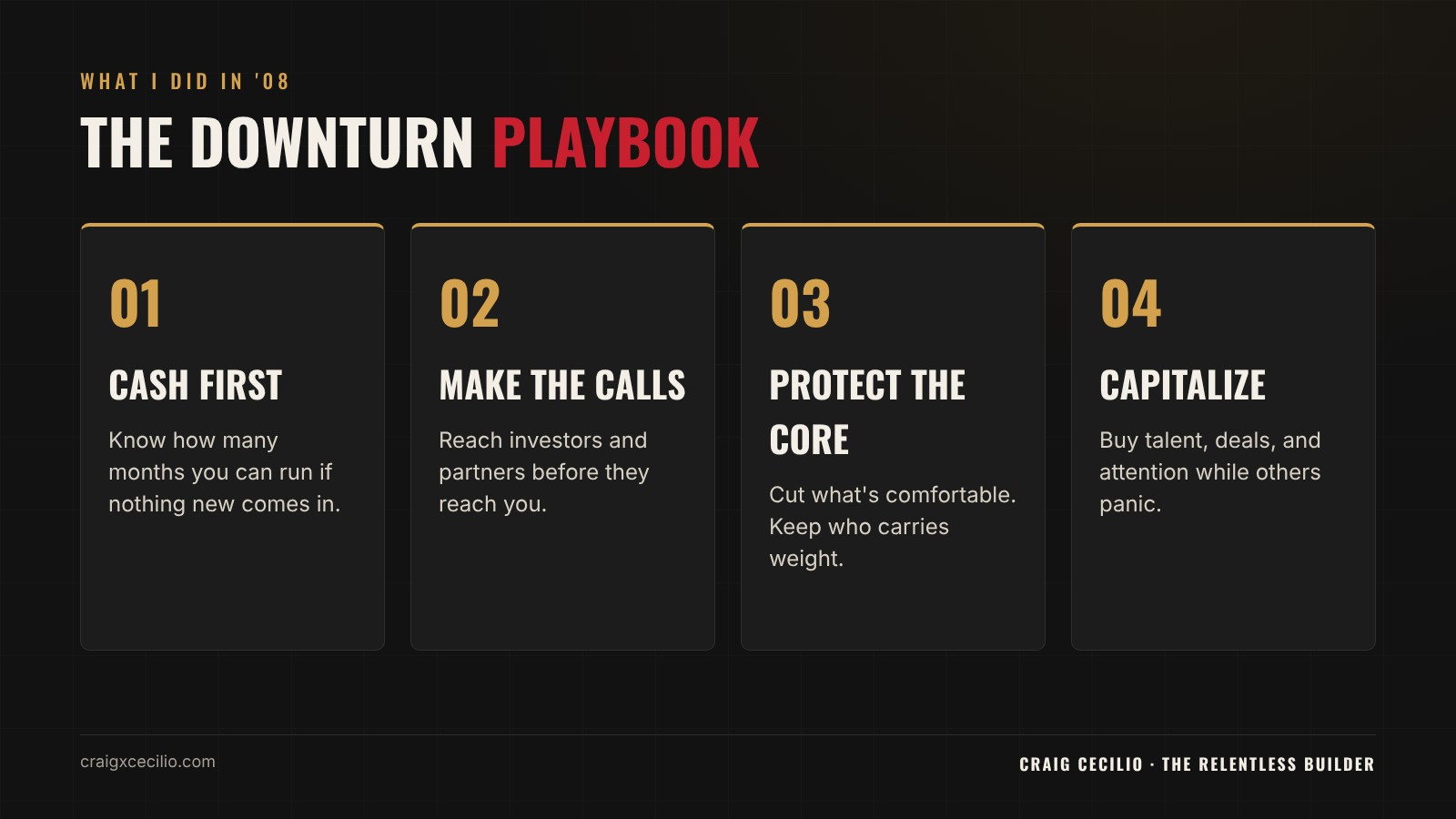
1. Cash first. Before strategy and before payroll decisions, know your number: how many months you can run if nothing new comes in. Write it down. Look at it every morning.
2. Make the calls before they call you. I called every investor and every partner before they had a chance to wonder. Bad news travels fast. It travels slower when it comes from you first.
3. Protect the core. Cut what's comfortable. Keep the people who carry weight. A downturn shows you exactly who those people are.
4. Capitalize. While everyone else panicked, I looked for what was suddenly on sale: talent, deals, and attention. The best buying windows of your career will feel terrible when they open.
What most owners got wrong
They froze.
They waited for someone to tell them it was over. They stopped hiring, stopped selling, and stopped talking to the people who funded them.
Silence is the most expensive thing an owner can do in a downturn. Your team reads it as fear and your investors read it as hiding. Your competitors read it as an opening.
Why this matters right now
I'm not predicting a crash. Nobody can time that, and anyone who says they can is selling something.
But I'll tell you what I see. AI is about to reset how companies run, and that shift will feel like a downturn to anyone who isn't ready for it. Same feeling, same choice.
Freeze, or rebuild the infrastructure while everyone else waits.
The owners who come out of the next cycle on top won't be the ones who guessed the date. They'll be the ones who already knew their number, already made their calls, and already built the machine.
Quick Answers
How do you run a business during a recession?
Know your cash runway, communicate early with investors and partners, protect the people who carry the most weight, and stay ready to buy talent and deals that suddenly become available.
What did small businesses face in 2008?
Credit tightened fast. The SBA's flagship 7(a) program made about 30% fewer loans in fiscal 2008 than in fiscal 2007, so many owners lost access to capital they had counted on.
What is the biggest mistake owners make in a downturn?
Going silent. When leaders stop communicating, teams, investors, and partners assume the worst.
Can a downturn be an opportunity?
Yes, if you have cash and conviction. Talent, deals, and market attention often get cheaper when most owners pull back.
Know your number. Make the call. Build the machine.
-Craig
#RelentlessBuilder · #Operators · #TheCXCExperience