

AI Is an Operating System, Not an App
Every owner wants to know which AI tool to buy. Wrong question. AI isn't something you install. It's the layer your whole company runs on.
Craig Cecilio · The Relentless Builder
The question I hear most from owners is always the same.
"Which AI tool should I buy?"
I get why they ask. It's how we've bought every piece of technology for thirty years. Find the best app, sign the contract, roll it out.
But that question tells me they're about to make an expensive mistake.

The wrong question
An app does one job. Email. Payroll. Scheduling. You can swap it out next year and the company barely notices.
AI doesn't work that way. Once it's running inside your business, it starts touching everything: how decisions get made, how work moves from one person to the next, what the company remembers, and who answers for the outcome.
That's not an app.
That's an operating system.
And you don't pick an operating system by reading reviews. You build the company to run on it.
Four things that change when AI runs underneath
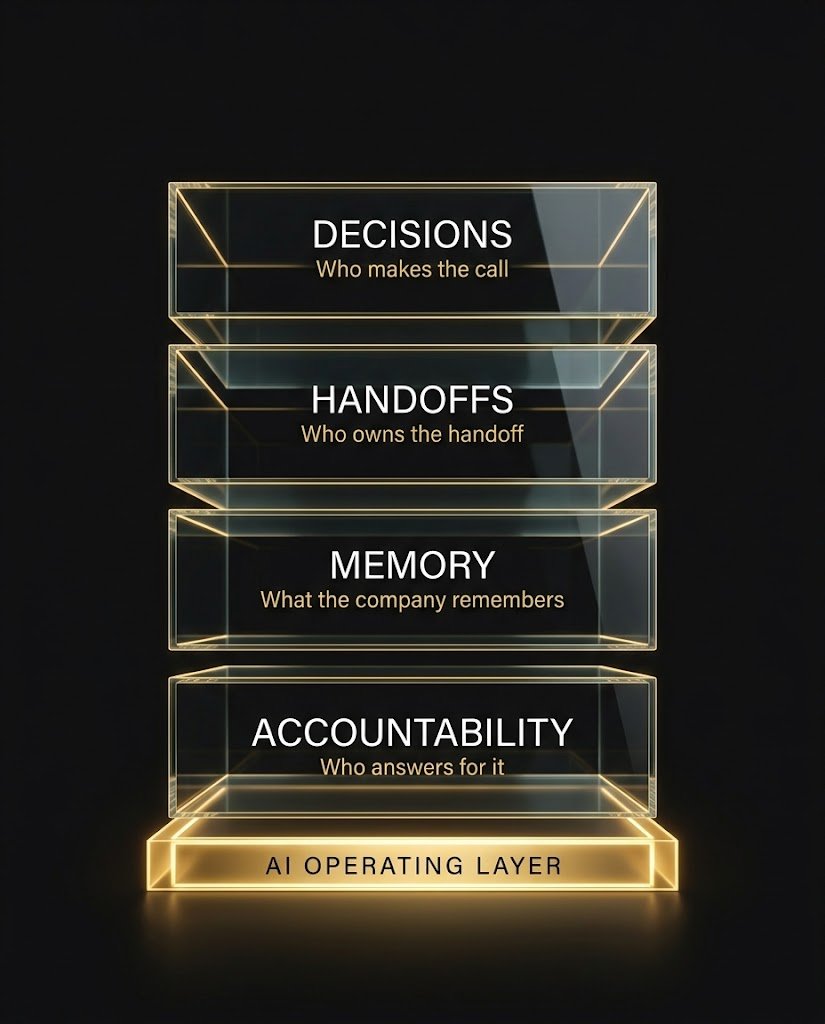
Decisions. Some calls move to the machine. Some never should. Every company needs a clear line on which is which, and that line is a leadership decision, not a software setting.
Handoffs. Work used to move person to person. Now it moves person to machine to person. Every handoff is a place where something can get dropped, so every handoff needs an owner.
Memory. Your company's knowledge used to live in people's heads and old email threads. AI can only use what's written down and connected. If it isn't captured, it doesn't exist.
Accountability. When AI gets it wrong, the software doesn't answer for it. You do. The operator carries the liability, every time.
What doesn't change
Here's what I tell every owner who's nervous about this.
The things that built your company still matter more than any tool. Your standards. Your judgment. Your word.
AI raises the floor. It doesn't raise the ceiling. The ceiling is still you and the people you trust to carry the weight.
AI does the volume. People own the judgment.
Why the window is short
AI as a feature is already past tense. Within a year, it's infrastructure.
The owners who treat it like an app will keep buying tools and wondering why nothing changes. The owners who treat it like an operating system will rebuild how they run, and they'll pull away.
That's the problem I'm building to solve. You'll hear more about it next year.
Quick Answers
How is AI different from regular business software?
Regular software does one job. AI touches decisions, handoffs, knowledge, and accountability across the whole company. That's why it has to be built in, not bolted on.
What should I do before choosing an AI tool?
Decide which decisions a machine can make and which need a human. Map how work moves through your company. Get your knowledge written down and connected. Then choose tools that fit.
Who is responsible when AI makes a mistake?
The company and its leadership. AI never removes accountability. It just changes where the checkpoints need to be.
Is AI going to replace my managers?
It will change what they spend time on. Less chasing information, more making calls. The managers who own judgment become more valuable, not less.
Stop asking which tool. Start asking how you run.
-Craig