

No Side Hustles. Two Years. No Compromise.
Every engineer I interview has an AI project on the side. I get it. I'm still not hiring it.
Craig Cecilio · The Relentless Builder
Third interview of the week.
Sharp guy. Strong resume. Ten minutes in, he mentions the AI startup he runs on nights and weekends.
So did the first two.
I don't hold it against them. If I were 28 and writing code in 2026, I'd have a side project too. But I'm not hiring a side project. I'm hiring the next two years of my company.
The two rules I say out loud
I put them on the table before we talk about money.
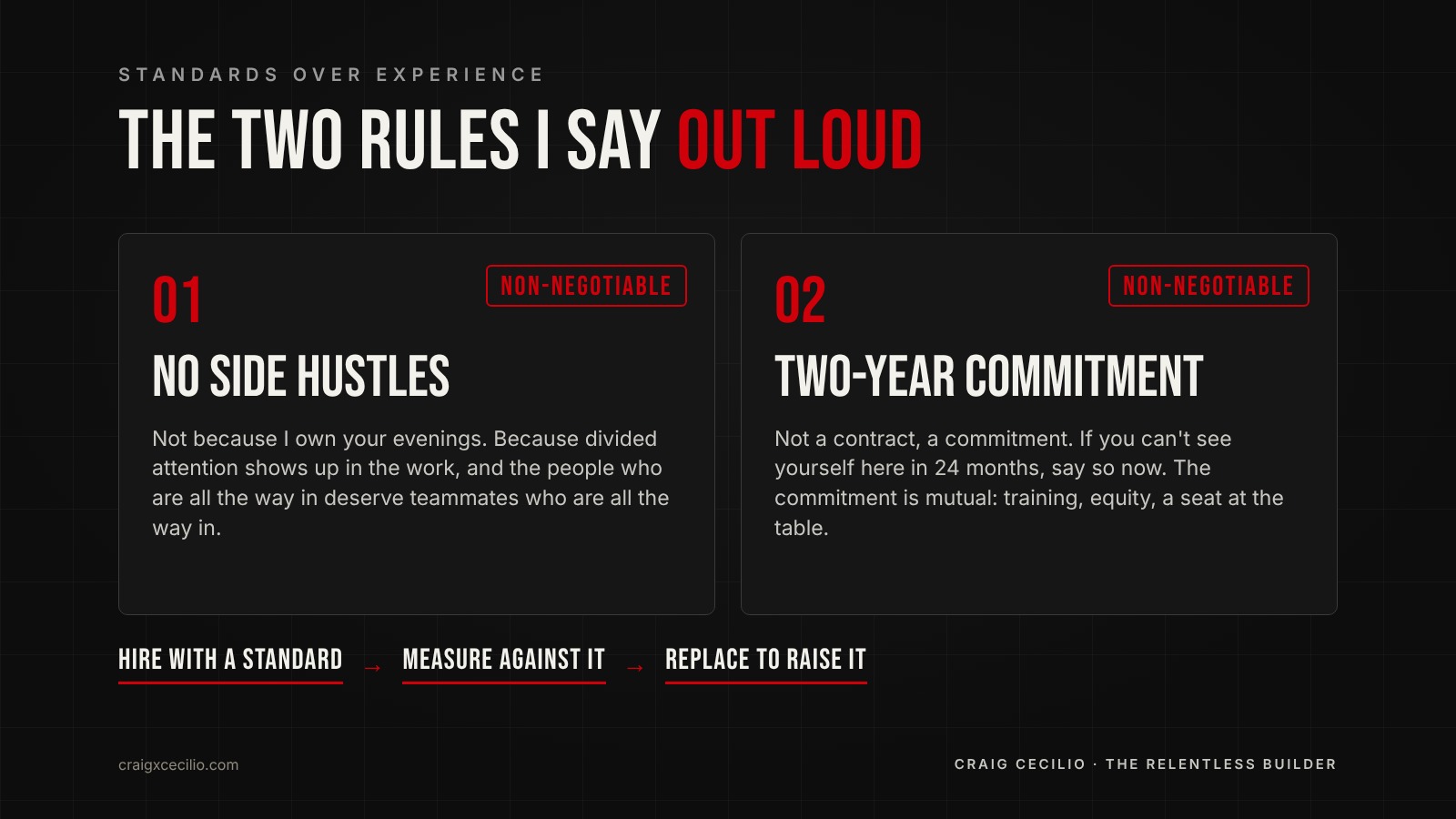
No side hustles. Not because I own your evenings. Because I've seen what divided attention does to a team that's trying to build something hard. The best work I've ever gotten from anyone came from people who were all the way in.
Two years. That's the commitment. Not a contract, a commitment. If you can't see yourself here in 24 months, tell me now and we'll both save a lot of time.
Some people walk when they hear it. Good. That's the rule doing its job.
Why this is a standards decision
I wrote earlier about why I stopped hiring for experience and started hiring for the standard. This is the same idea with the gloves off.
A standard is only a standard if you won't trade it for talent.
The minute I make an exception for the brilliant guy with the side company, I've told the whole team the rule is negotiable. And once a rule is negotiable, every rule is.
I've raised capital from 70,000 investor transactions. The one thing that never changed across all of them was this: people bet on the person who doesn't bend.
Two VPs. One shot.
Here's what's at stake for me right now.
I need two VPs of Engineering. If one doesn't work out and I have to go back to market, that's six months I don't get back. On a build like this, six months is the difference between launching first and launching second.
So I'm running the hiring process the way you'd run anything that can't afford a miss. Slow on the decision. Fast on the standard.
There's a scene in The Dark Knight where the Joker drops a broken pool cue between three guys and tells them there's one opening. I'm not running tryouts like that. But I'll be honest about the energy: there are more good engineers than there are seats on this team, and the seat goes to whoever meets the standard without an asterisk.

Hire and fire. Then hire better.
This is the part owners don't like to say in public.
If you hire someone and they're not it, replace them. Quickly, respectfully, and with someone better. Not because you're cruel. Because the people who are all the way in deserve teammates who are all the way in.
Every day you keep the wrong person, the right people notice.

What this looks like at your company
You don't need my exact rules. You need your own, said out loud.
- Pick the two or three things you will not negotiate on, and say them in the first interview.
- Let people self-select out. The ones who leave were going to leave anyway.
- Make the commitment mutual. Two years from them means two years of real investment from you: training, equity, a seat at the table.
- When you miss, fix it fast. A bad hire you keep is a decision you're making every single day.
Quick Answers
Should you let employees have side businesses?
That's your call, but make it a stated rule, not a case-by-case negotiation. I don't allow it on my core team because divided attention shows up in the work.
How long should a new hire commit?
I ask for two years. That's long enough to build something real and short enough to be an honest promise.
How do you hire engineers who stay?
State the standard before the offer, let people opt out early, and make the commitment go both ways. Retention starts in the first interview.
Is it bad to fire someone quickly?
It's worse to keep someone slowly. Fix the miss fast and replace with better. Your strongest people are watching how you handle it.
Say the rule. Hold the rule. Build the team.
-Craig
#RelentlessBuilder · #Lieutenants · #Operators · #TheCXCExperience